How PBM Spread Pricing Works and What You Can Do About It
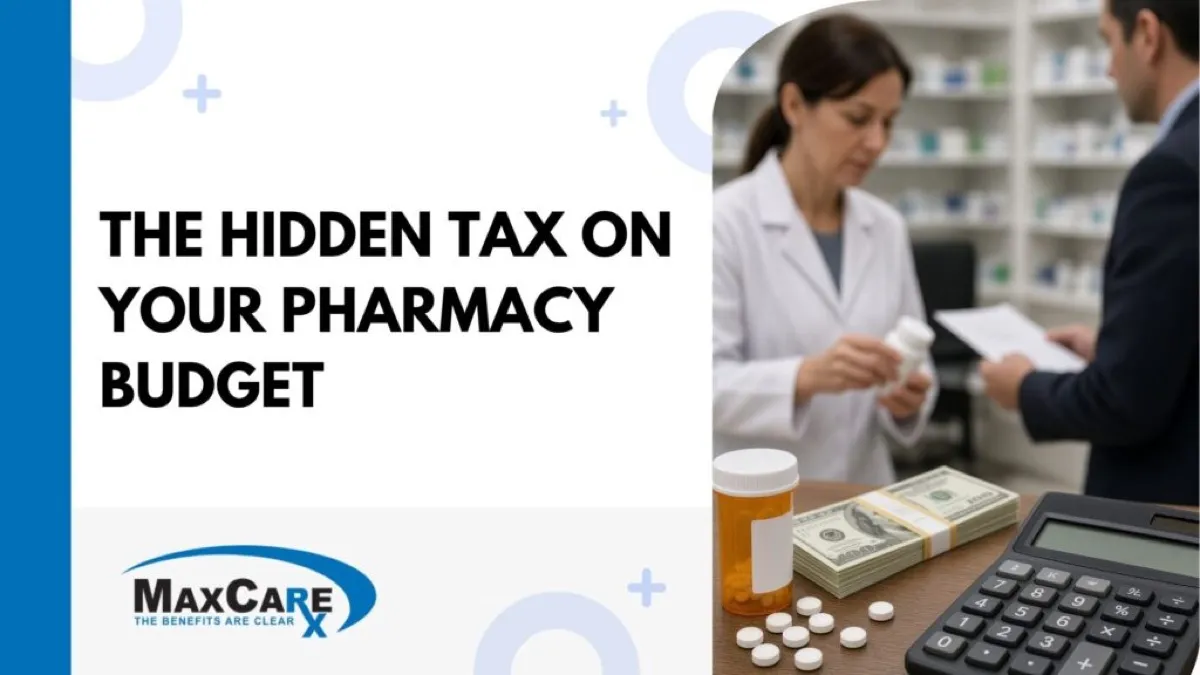
Most self-insured employers know their pharmacy benefit costs are high. Fewer know exactly why, or where the money is going. Spread pricing is one of the most consequential and least understood mechanics in the pharmacy benefit industry, and it is likely costing your organization money right now.
Here is a plain-language explanation of how spread pricing works, why it is embedded in most traditional PBM contracts, and what the alternative looks like.
What Is Spread Pricing?
Spread pricing is the practice of charging a health plan more for a prescription drug than the PBM actually pays to fill it, and keeping the difference.
Here is a simplified example:
- Your employee fills a 30-day supply of a generic blood pressure medication.
- The pharmacy dispenses the medication for $8.
- The PBM bills your plan $14.
- The $6 difference (the “spread”) stays with the PBM.
This happens on every claim, across every generic drug, at every pharmacy in the network. The PBM sets its own reimbursement rates for pharmacies and its own billing rates for plans, and the space between those two numbers is profit.
For employers with hundreds or thousands of covered lives, spread pricing generates thousands of transactions per month. The cumulative impact on annual pharmacy spend is significant, and by design, it is difficult to see in standard PBM reporting.
Why Spread Pricing Is Hard to Spot
Traditional PBM contracts are not designed to make spread pricing visible. The contracts typically disclose what your plan will pay per claim, not what the PBM pays the pharmacy. The difference between those two numbers is treated as proprietary information, not subject to standard audit rights.
You may see a report showing your “ingredient cost,” your “dispensing fee,” and your “plan paid” amount. What you will not see is a line item that says “PBM margin on this claim: $6.00.”
States have increasingly passed transparency legislation requiring PBMs to report spread pricing to Medicaid programs and, in some cases, private plans. But enforcement varies, and many employer health plans are not covered by state-level PBM transparency requirements.
The result: most employers who use traditional PBMs have no practical way to quantify how much spread pricing is costing them.
The Pass-Through Alternative
A pass-through PBM eliminates spread pricing by design. In a pass-through model, the PBM charges the plan the same amount it pays the pharmacy (actual acquisition cost) plus a transparent administrative fee. There is no spread, no margin on the drug itself, and no incentive to steer toward higher-cost medications that generate more spread income.
At MaxCare, the model works like this:
- Your plan pays the actual cost of drugs dispensed to your members.
- MaxCare charges a transparent, fixed administrative fee per claim.
- You receive reports that show exactly what every claim cost and why.
- You have full audit rights to verify these figures against pharmacy payment records.
There is nothing hidden because there is nothing to hide. The fee is the fee. Every dollar in drug costs goes toward drug costs, not PBM margin.
Rebates: The Other Side of the Transparency Picture
Spread pricing is one way traditional PBMs profit at the plan’s expense. Retained rebates are another.
Drug manufacturers pay rebates to PBMs in exchange for preferred formulary placement. In theory, these rebates offset drug costs for the plan. In practice, traditional PBMs typically retain a portion of the rebates they collect, often without disclosure of how much.
A plan sponsor may see a rebate figure in their contract (“you will receive X% of rebates collected”), without knowing what the total rebate pool looks like or how the PBM’s portion is calculated.
MaxCare passes through 100% of manufacturer rebates to the plan. No holdbacks. The rebate the manufacturer pays is the rebate your plan receives.
What Audit Rights Actually Mean
A meaningful audit provision in a PBM contract does more than acknowledge that audits are possible. It specifies:
- That the plan has the right to audit actual pharmacy payment records (not just the claims file)
- That independent auditors can verify the spread between what the PBM paid pharmacies and what it billed the plan
- That audit findings are actionable: if spread is discovered, there is a process for remediation
If your current PBM contract’s audit provision does not cover these elements, it may not give you the visibility you think it does.
MaxCare’s contracts include full audit rights. Our clients can verify, at any time, that what they are paying matches what pharmacies are being paid.
The Business Case for Switching
For employers currently operating under a traditional spread-pricing PBM, the question is often: how much is this actually costing us?
The honest answer: you cannot calculate it from your current reporting. That is by design.
What you can do is request a pharmacy spend analysis from MaxCare. We will compare your current benefit structure (using your actual claims data) against a pass-through model, and we will show you in plain numbers what the difference looks like. No obligation, no speculation. Just the math.
For most mid-market employers we work with, the combination of spread elimination and full rebate pass-through represents meaningful savings: savings that go back to the plan rather than into PBM revenue.
The benefits are clear. The question is whether your contract makes them visible.
Request a Free Pharmacy Spend Analysis → https://www.maxcarerx.com | Call: (800) 259-7765
MaxCare RX is an independent PBM headquartered in Oklahoma City, Oklahoma. We operate on a 100% pass-through model: zero spread pricing, full rebate transparency, full audit rights. We are not owned by an insurance company, mail-order pharmacy, or specialty drug distributor. Our success is measured by your savings.